
Everyone’s talking about what leaders need to survive the AI era. Most of the advice points the same direction: get technical, move fast, be decisive. I’ve been watching a different pattern.
The leaders I’ve seen build the strongest teams aren’t the most brilliant.
What I’m Seeing
I’ve built high-performance engineering teams again and again, and as a director I had a front-row seat to how dozens of senior leaders operated under pressure.
The pattern that kept showing up: the best leaders weren’t the ones with the sharpest answers. They were the ones who asked the best questions. They’d walk into a room, set the context clearly, then get genuinely curious. Not curious as a performance — curious because they understood that the room collectively knew more than they did alone.
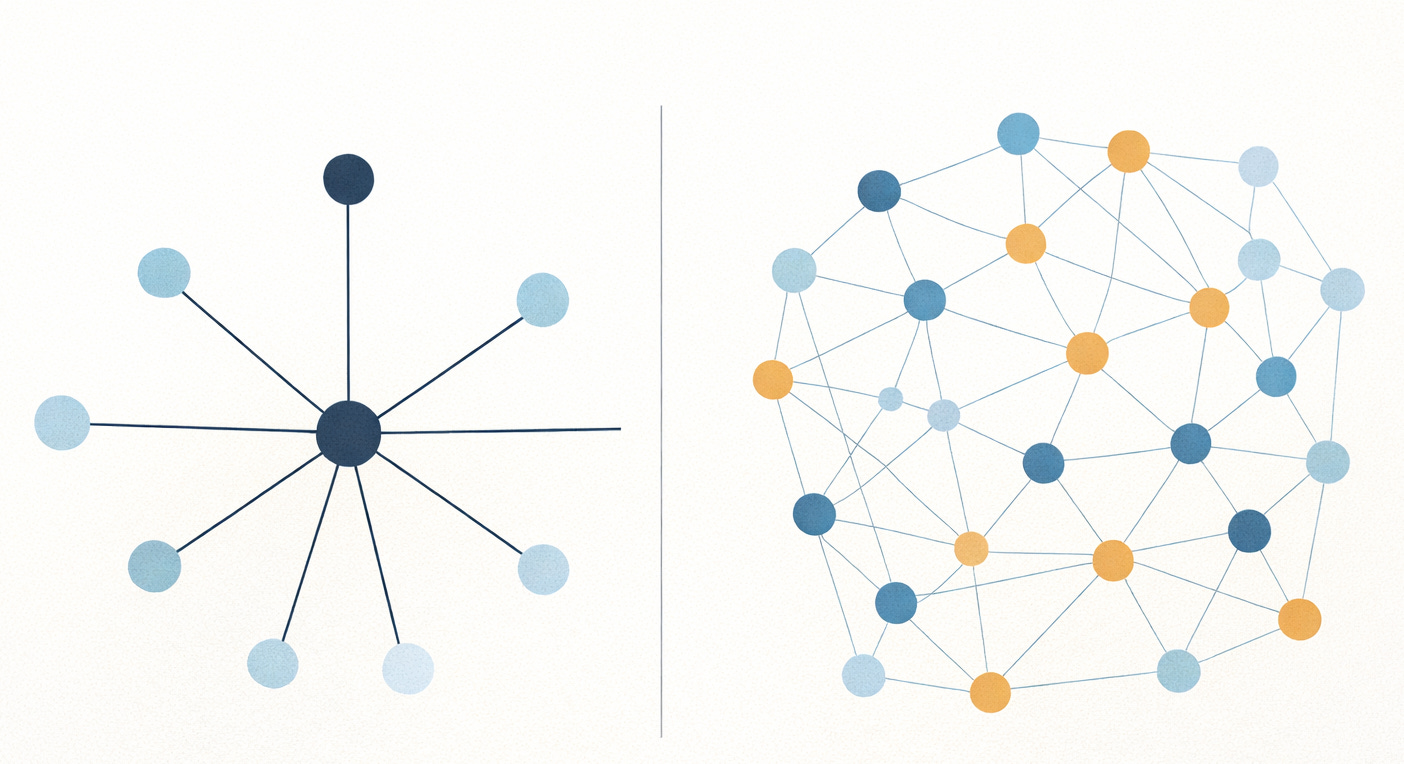
I worked with a senior leader as one of the most brilliant people I’ve known. But what made the exceptional wasn’t her intelligence — it was how intentional she was about creating safety on her team. She set the context, asked the right questions, then got out of the way. Because people felt safe to speak up and push back, ideas came from everywhere — bottom-up proposals that nobody at the top would have thought of. Some of those ideas generated outsized outcomes for the entire organization. Her intelligence wasn’t the ceiling. It was the foundation that gave everyone else room to build.
I’ve also seen the opposite. A team where the most senior person required their personal sign-off on every code review and design decision. Everything funneled through one brain. It didn’t just slow their own team down — it slowed down every team that depended on them. And here’s the part that made it truly damaging: over time, the team started modeling that behavior. They became gatekeepers themselves. Cross-team collaboration ground to a halt. One leader’s need for control had replicated itself through the entire org.
The question worth sitting with: are you doing this because your team needs you to, or because it makes you feel important? Because there’s a real difference between adding value and protecting your sense of influence. No one can be the best at everything — that’s obvious in theory. In practice, most leaders still act like they should be.
The leaders who get this right do something harder. They get honest about their own limitations — not as a performance of humility, but as a real reckoning. They figure out where they uniquely plug in and, just as importantly, where they don’t. That clarity is what lets them invest deeply where it counts and genuinely let go everywhere else.
Here’s what I’ve come to believe: a leader’s job isn’t to be the smartest person in the room. It’s to make the room smarter — and that starts with knowing yourself well enough to know where you belong in it. When a leader can do that, collective intelligence takes over. The team starts seeing around corners that no individual — no matter how brilliant — could see alone.
When a leader can’t, the opposite compounds. Their thinking becomes the ceiling — and worse, their style becomes the culture.
Why This Matters More Now
In the AI era, this dynamic isn’t just important — it’s existential.
AI is accelerating everything. Teams now have access to more data, more options, and more decisions to make than ever before. The bottleneck has shifted. It’s no longer about finding information. It’s about deciding what to do with it — quickly and well.
That means the leader who hoards decisions or needs to be the final voice on everything becomes a real liability. The speed of the environment will outrun any single person’s capacity to process it. And the complexity will outrun any single person’s expertise. No leader — however talented — can be the best at data strategy, product sense, people development, technical architecture, and AI adoption all at once. The honest question isn’t “what are my strengths?” It’s “where do I actually add the most value — and where am I getting in the way by pretending I should?”
A leader who’s done that honest inventory — who knows where they plug in and where they need to step back — creates a multiplier effect. The team’s collective intelligence compounds. They move faster and make better decisions because they’re not waiting for permission — they have the context to act, and the leader isn’t accidentally bottlenecking areas they don’t actually understand best.
This is the shift most people are missing. As AI lowers the cost of data gathering and learning, leadership advantage shifts toward judgment, trust, and coordinated execution. The ability to build a team whose combined intelligence grows beyond what any one person — including the leader — could produce alone. And that requires psychological safety. It requires empathy. It requires humility. It requires curiosity that’s genuine, not performative.
Curiosity, calm, humility, and empathy aren’t nice-to-haves. They are the operating conditions for fast, high-quality decisions. And to be clear — psychological safety doesn’t mean a lower bar. It means a higher one. When people feel safe, you can demand more from them — more honesty, more rigor, more ownership — because they’re not spending energy on self-protection.
Your Turn
And by “leader,” I don’t just mean people managers. If you’re setting a direction that requires other people to execute — whether you’re a founder, a tech lead, or an entrepreneur building something from scratch — this applies to you. Leadership is the dynamic, not the title.
So this week, notice one moment where you’re tempted to give the answer instead of asking the question. Pause. Ask yourself: am I doing this because the team needs me to, or because it makes me feel like I’m leading? See what the room gives you when you make space for it.
The AI era will reward teams that think together. Your job is to make that possible.
If any of this resonates with you, I'd love to connect. You can explore options to work with me through amywucoaching.com or subscribe to my newsletter and get frameworks, mindsets, and lessons.